Rooted in Family
Our story begins in 1978, when our family moved to the farm to raise cattle and sheep, along with a few pigs and chickens.
Growing up here meant spending countless hours baling hay, picking up rocks, and cutting firewood to heat our home. But of all the places on the farm, the woods were always my favorite.
As kids, my little sister and I would wander through the trees searching for hidden treasures. I was convinced there was gold buried somewhere out there.
Over the years, our own children have enjoyed those same woods, blazing trails, swimming in the creek, and hunting deer, rabbits, and squirrels.
These woods have been part of our family’s life for generations, and today they are at the heart of something new.
The First Taste of Maple
In the early 2000s, I spent time helping local maple syrup makers and became interested in making syrup from the Sugar Maples growing right here on our farm.
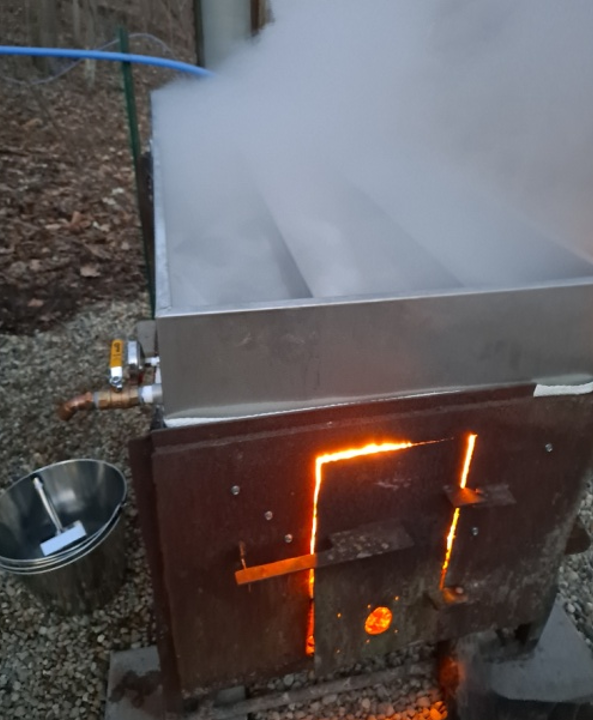
When a neighbor upgraded his syrup equipment, he gave me his old boiling pan. Another friend and I headed to a junkyard to find something we could turn into a wood-fired arch, or firebox, to support the pan.
We found an old boiler that had been repurposed into a livestock feeder. It was just the right size. With the help of another friend’s welding shop, we transformed it into a working maple syrup evaporator.
It wasn’t fancy, but it worked.
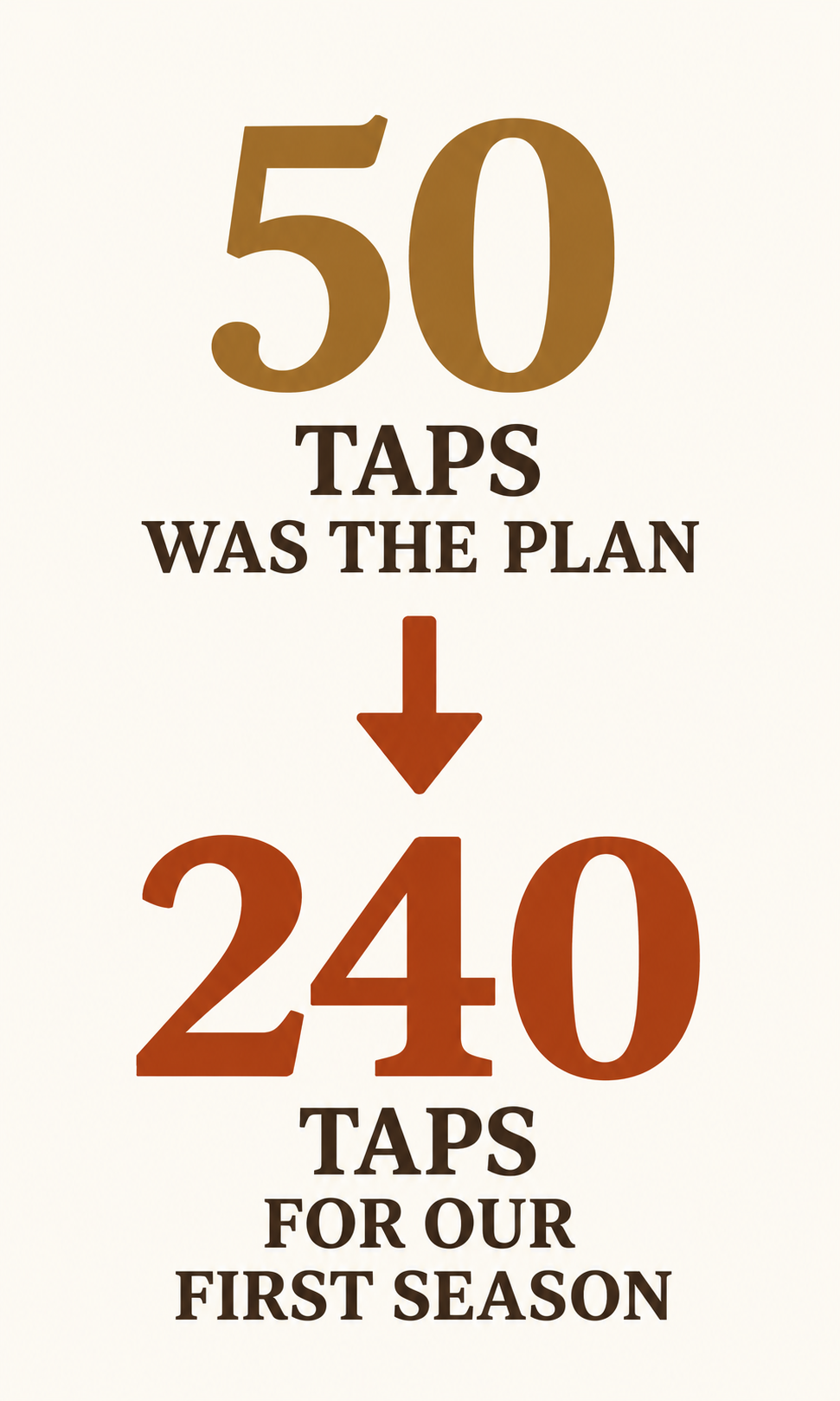
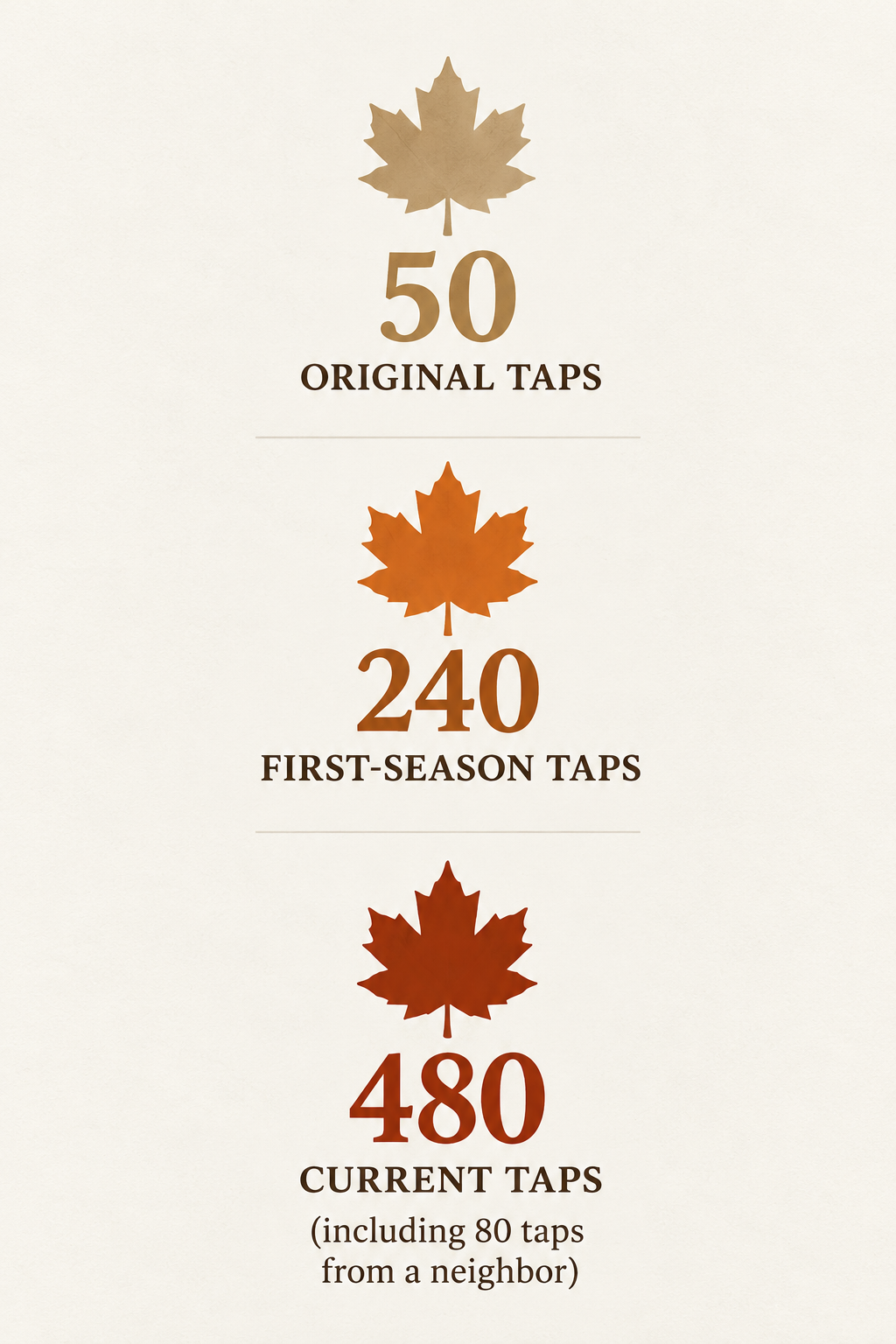
For a couple of seasons, I ran around 50 taps, collecting sap and making maple syrup from our own trees.
Eventually, life got busy, and syrup making took a back seat for several years. But the idea of returning to the woods never really went away.
Back to the Maples
After making some career changes that opened up my schedule, Erica and I decided to start making maple syrup again in 2025.
The plan was simple: 50 taps.
I had managed that many before, so it seemed like a reasonable place to start.
Then one of our neighbors invited us to walk their woods to see if we could find a few more Sugar Maples.
We did.
Then another neighbor had some maple trees nearby.
Before we knew it, our carefully planned 50-tap operation had grown to 240 taps for our first season.
What started as a small family project was quickly becoming something much bigger.
Our First Season
To handle all that sap, we purchased a small reverse osmosis system, commonly called an R.O. This equipment removes much of the water from maple sap before boiling, saving both time and firewood.
We also purchased a new 2½-foot by 6-foot boiling pan, sized to fit the wood-fired arch we had built years earlier.
What we didn’t have was a sugarhouse.
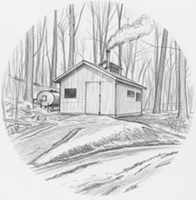
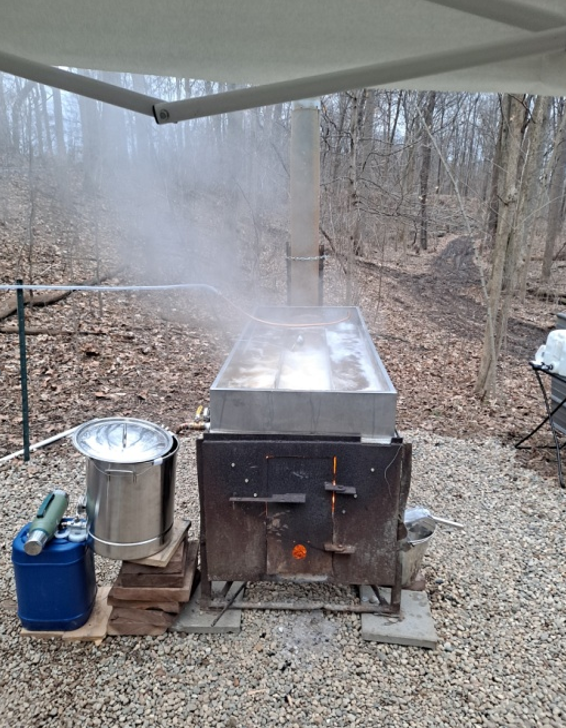
Our first season was spent boiling beneath a 10×10 canopy, surrounded by stacks of firewood and tarps hung wherever we could to block the wind.
There were maybe two beautiful days of boiling that season.
The rest seemed to bring rain, wind, or both.
Despite the challenges, those long days spent tending the fire, watching the sap boil, and enjoying the sweet aroma of maple steam reminded us exactly why we wanted to get back into syrup making.

How “Smoke of the Woods” Got Its Name
That first-year setup wasn’t exactly perfect.
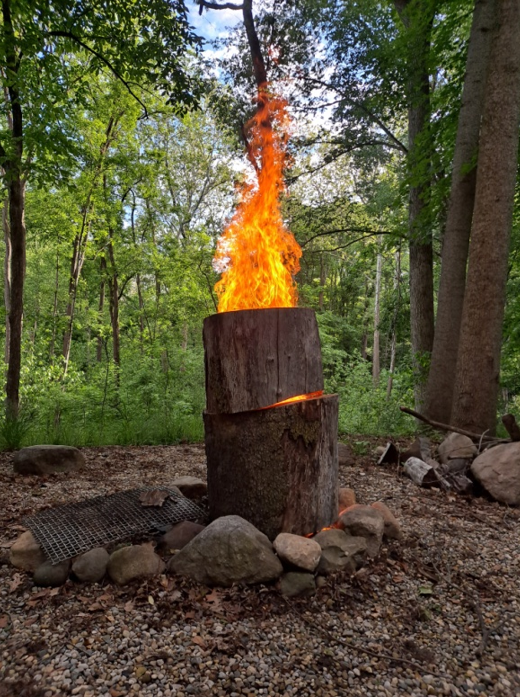
With a short chimney, an open-sided canopy, and plenty of Indiana wind, smoke from the wood-fired arch had a tendency to swirl around our makeshift boiling area.
Occasionally, smoke would drift across the boiling pan and find its way into the syrup, giving certain batches a subtle smoky character.
Combined with the wonderful aroma of maple-scented steam rising into the cool air, it made for an experience we wouldn’t soon forget.
And from those long days boiling maple sap in the woods came the name:
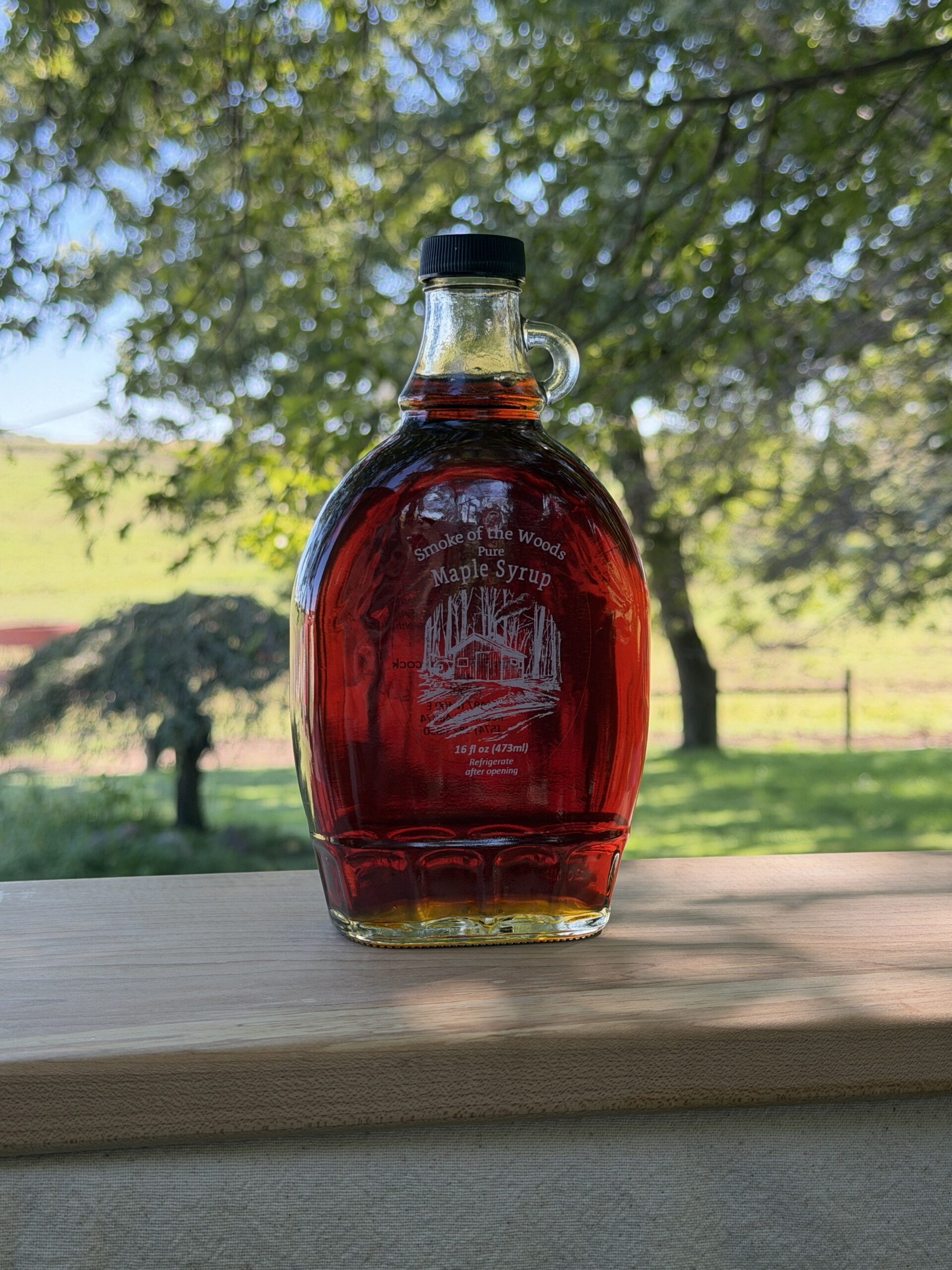
Smoke of the Woods
What started as a reflection of our less-than-perfect setup became the perfect way to describe where our syrup, and our story, began.
Building the Sugarhouse
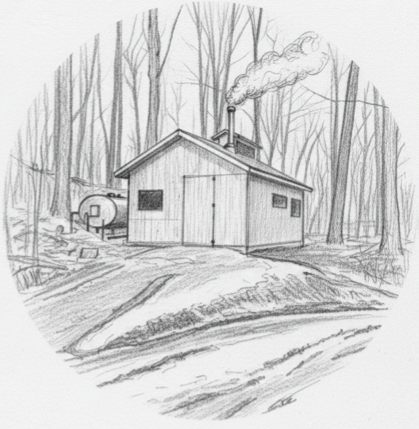
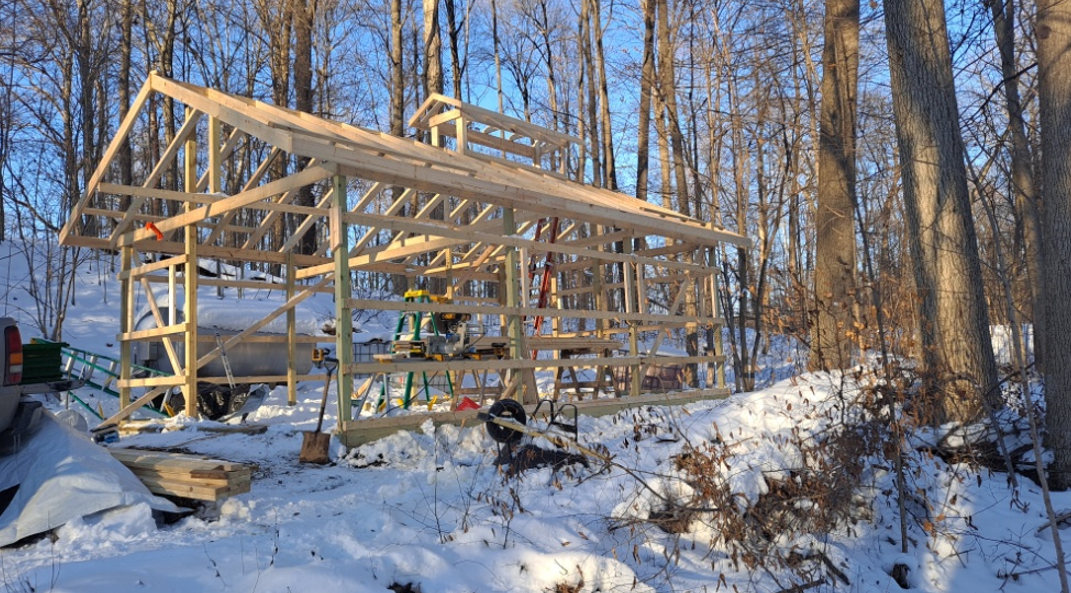
After that first season, we agreed on one thing: If we changed nothing else, we were building a sugarhouse.
With the help of family and friends, construction began in November.
Many workdays ended with temperatures in the teens, and sometimes even the single digits. But by the following maple season, we finally had a place to boil that offered protection from the rain, wind, and unpredictable Indiana weather.
Of course, once the sugarhouse was enclosed, we started thinking about adding a few more taps.
Nothing crazy.
Maybe a modest 30% increase.
Growing One Tap at a Time
Apparently, our version of a modest increase is a little different from everyone else’s.
Throughout January and February, we installed additional tubing through the woods to reach more Sugar Maples, often working in temperatures that made staying inside sound much more appealing.
By the time we finished, our original 240 taps had somehow grown to 480 taps, including sap from approximately 80 taps that we boil for a neighbor.
Naturally, more taps meant more sap.
And more sap meant our original reverse osmosis system needed an upgrade.
That’s when we discovered one of the great truths of maple syrup making:
There is always something bigger to buy, something to improve, and another maple tree just a little farther into the woods.
Caring for Our Woods
Our woods provide more than just maple sap. They are a living part of our family farm, and caring for them is a responsibility we take seriously.
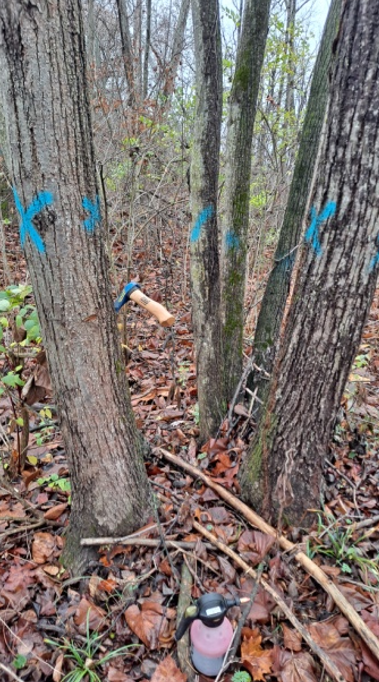
One important part of maintaining a healthy forest is a practice known as Timber Stand Improvement, or TSI.
This involves selectively removing lower-quality trees, managing trees that crowd healthier ones, controlling invasive plants, and removing vines that can damage growing trees.
We also harvest mature timber as part of managing our woodland.
These efforts help create space for sunlight to reach the forest floor, encouraging new growth and helping the next generation of trees flourish.
And, if we’re lucky, that means a few more Sugar Maples for future generations.
Managing our woods is about more than what we can harvest today. It’s about protecting and improving the forest for the years ahead.